
Last updated November 25, 2026
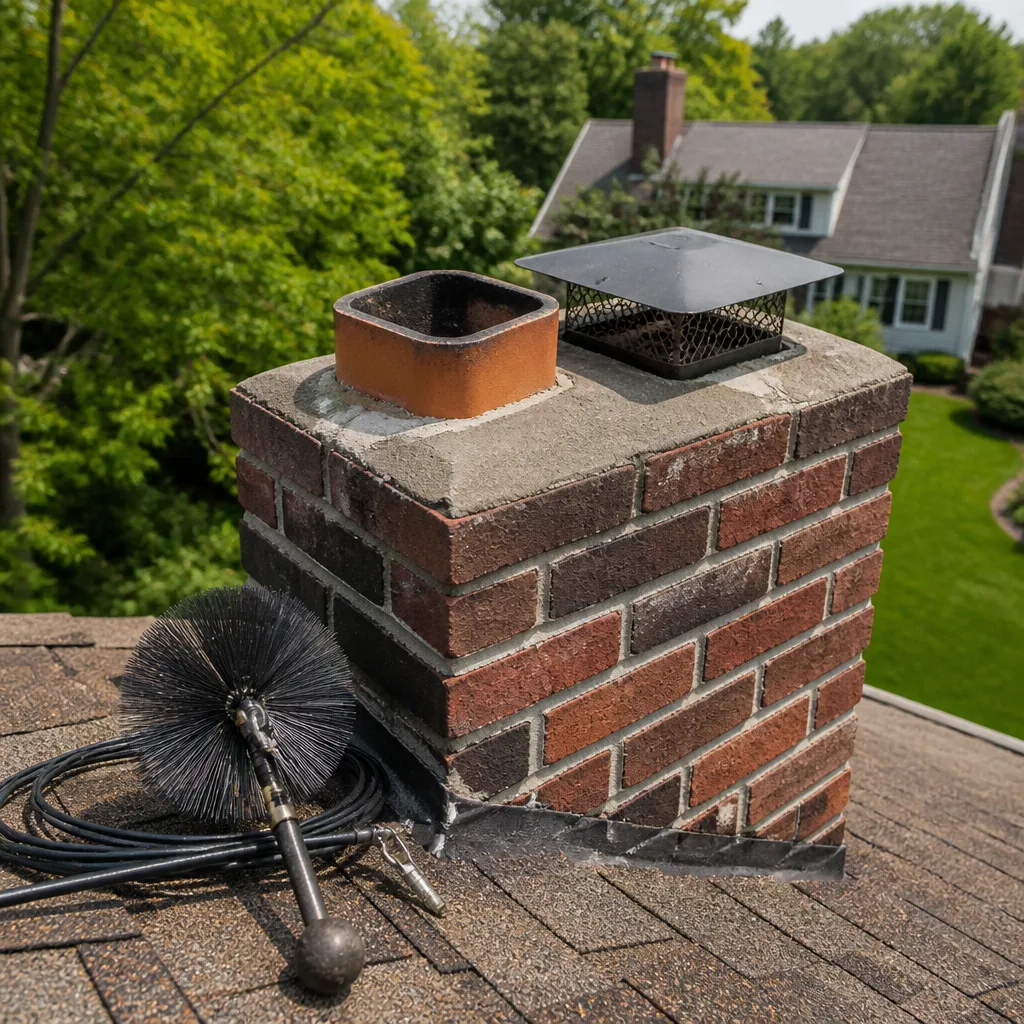 Sweep & inspection
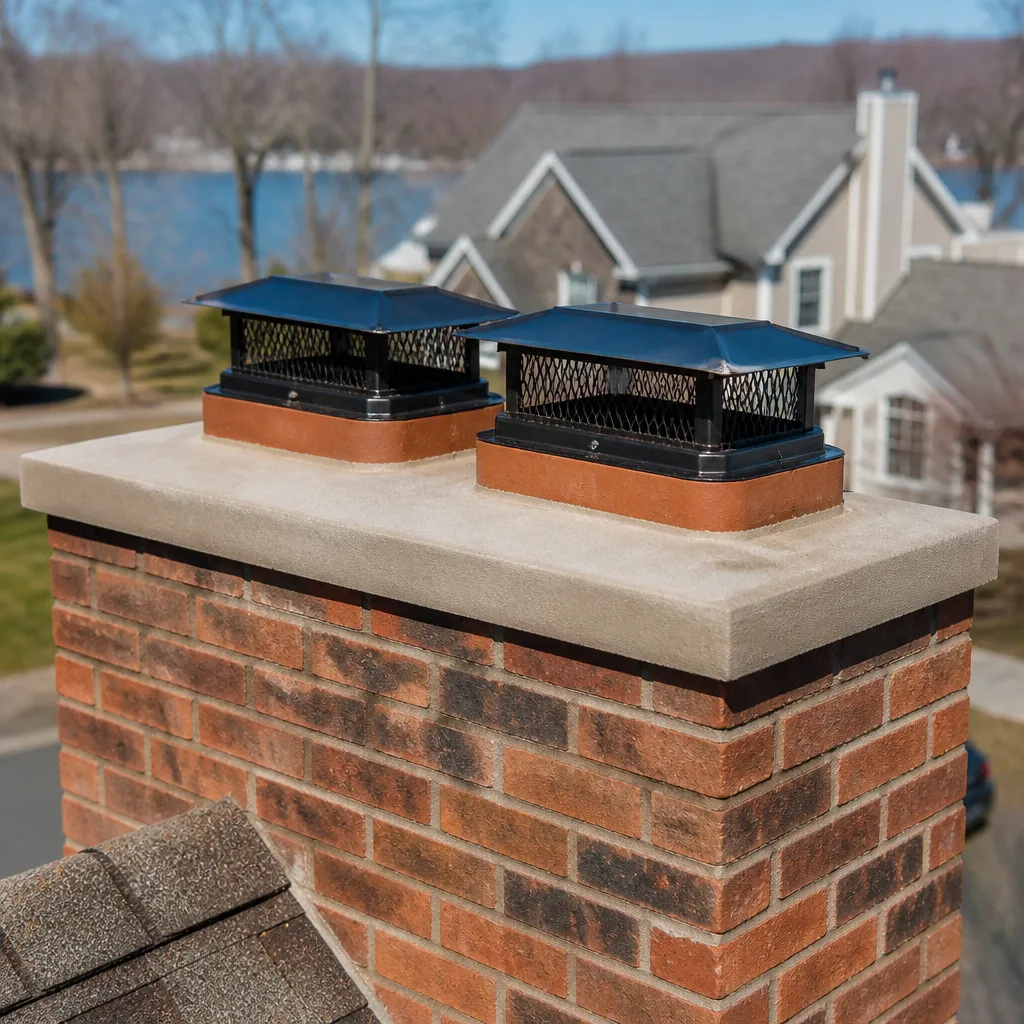 Caps & crowns
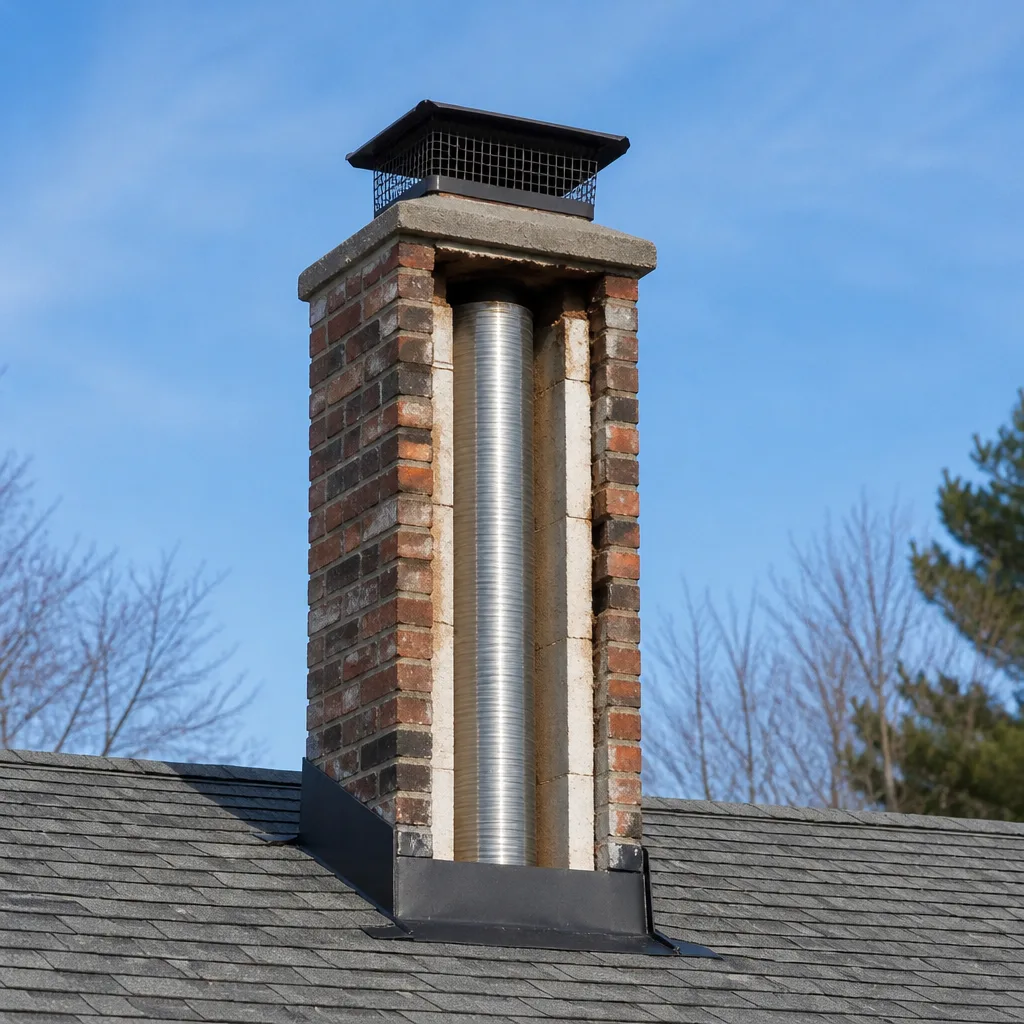 Flue relining
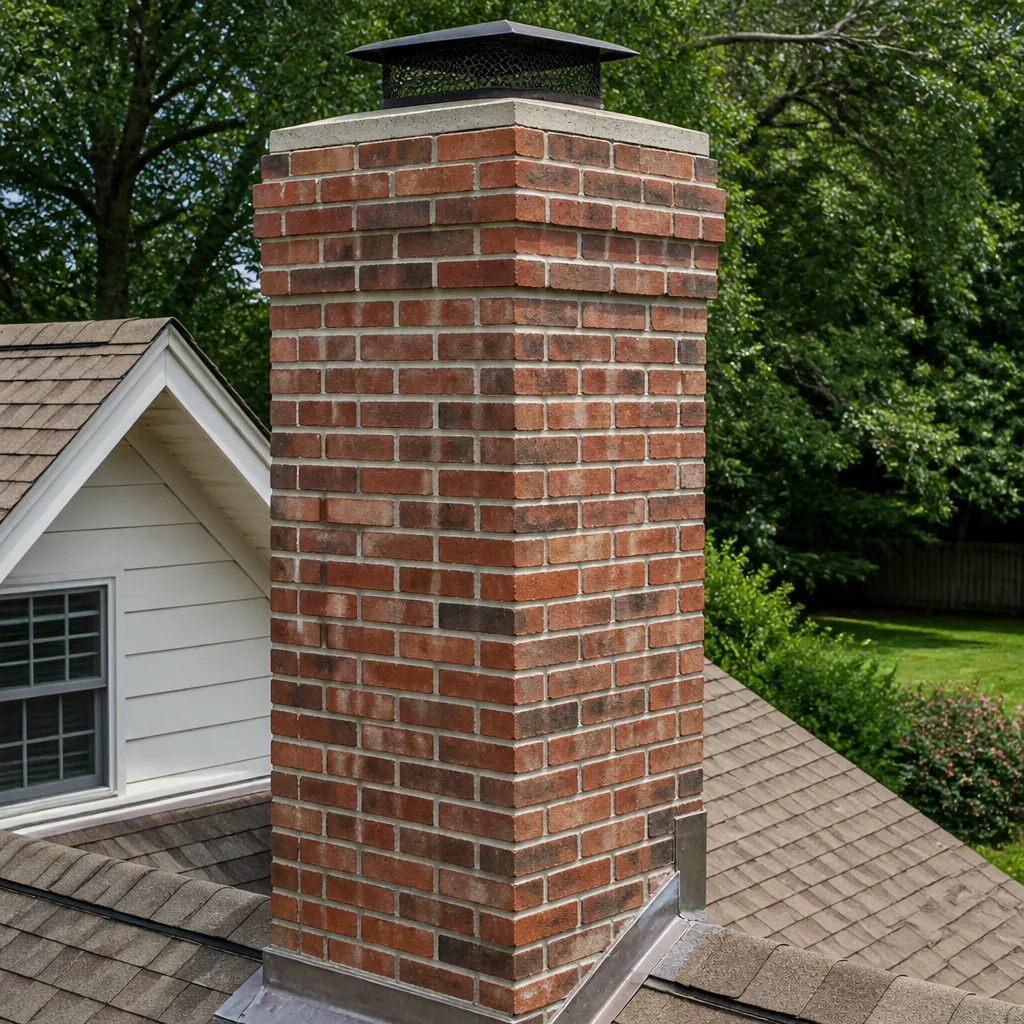 Masonry repair
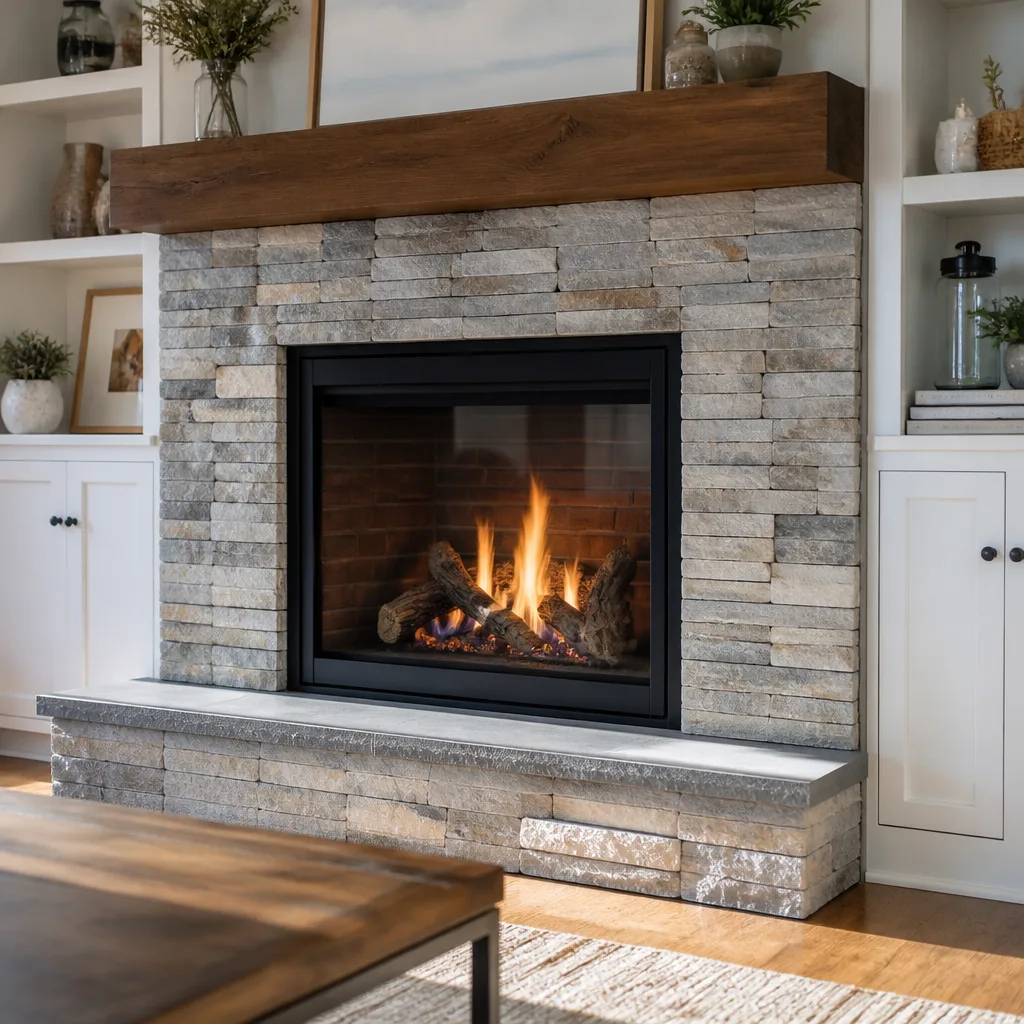 Gas fireplace service
Level 1 sweep and inspection to the NFPA 211 annual standard - flue, crown, cap, and flashing checked and photographed
Chimney sweep logs do not sweep chimneys. They loosen some creosote - which then falls where a brush and vacuum still have to collect it.
Chimney Sweep Maintenance Checklist for Dana Point Homeowners
The standard “annual inspection” rule was written for wood-burning homes in cold climates, where a house might burn three or four cords a season and the chimney never fully cools down. Dana Point isn’t that. Most homes here burn a cord or less, many fireplaces sit idle from April to November, and the marine layer does a slow number on metal parts that a national checklist never accounts for. A maintenance calendar copied from a national template will have you checking for things that don’t happen here and skipping the ones that do. This guide walks through what actually degrades in a Dana Point chimney, month by month, and how to document it so you can see problems coming instead of hearing about them after the fact.
Quick Answer
In Dana Point, a chimney should be swept and inspected once a year if you burn regularly, and inspected every year even if you burn only occasionally, because the marine layer and the long idle season wear on caps, crowns and liners faster than the fire itself does. The most useful checklist is timed to local conditions: crown and chase cover before the first rain, a full sweep before burning season, and a visual check on gas inserts and dampers whenever the fireplace has sat unused for months. If you burn less than a cord a year and your flue stays clear, annual inspection is usually enough; if you notice staining, crumbling mortar or a smell in the room, it’s time to stop burning and get a professional look.
Styles & brands we work with
- Sweep & inspection
- Caps & crowns
- Flue relining
- Masonry repair
- Gas fireplace service
Table of Contents
- Why a Dana Point Chimney Ages Differently
- The Month-by-Month Maintenance Calendar
- What to Check Yourself Before You Call Anyone
- The Signs That Mean Stop Using the Fireplace Now
- Crown and Chase Cover Cadence for This Climate
- Checklist Items for Gas Log Inserts
- How to Document Condition Over Time
- What a Proper Sweep Visit Involves
Why a Dana Point Chimney Ages Differently
Most chimney guidance assumes a house that burns hard through a cold winter. Dana Point doesn’t work that way. The burning season here is short and intermittent, which means the firebox and flue spend most of the year cool and damp rather than hot and dry. That idle stretch is where a lot of the wear happens.
Three local conditions drive most of the difference:
- Marine layer humidity. The overnight and early-morning moisture that settles over the hills and canyons doesn’t just burn off a masonry chimney. Masonry pulls moisture into its pores, and a crown that has begun to crack lets that moisture move into the chimney structure itself, where it works on mortar joints and interior surfaces.
- A long idle season. A flue that sits unused for months collects dust, debris and nesting material. Some of that is harmless; some of it blocks the flue enough to affect draft when you finally light a fire in the fall.
- Housing stock. A large share of Dana Point homes were built with fireplaces, and many have been converted to gas log inserts over the years while keeping the original clay flue in place. A gas insert in a flue sized for wood is a very different maintenance problem than a wood-burning fireplace, and a checklist built for wood won’t catch it.
None of this means Dana Point chimneys are in worse shape than anywhere else. It means the failure points are different. The crown, the chase cover, the damper and the liner connection matter more here than the creosote load, in a lot of homes. That’s the recalibration this checklist is built around.
The Month-by-Month Maintenance Calendar
A four-season calendar written for a cold climate doesn’t map onto Dana Point. Here’s the schedule we’d give a homeowner who burns a cord or less per season and wants to stay ahead of problems rather than react to them.
- January through February. Peak burning season. Keep an eye on the firebox between fires. Glazed, sticky creosote on the flue walls is a sign the fire isn’t burning hot enough, which happens easily when you burn occasional small fires rather than steady ones. Check that the damper opens and closes smoothly. If the fireplace smells smoky even when it’s not lit, note it for the spring visit.
- March through April. Wind down and look up. This is the window to get on the roof, or have a technician get up there, and check the crown, the chase cover and the cap before the dry season. Winter moisture has had months to move into any crack. Catching it now, before the heat of summer opens it further, is the difference between a repair and a rebuild.
- May through June. Clear out the firebox, sweep the hearth and check that the damper seals. If you’ve been putting off a sweep, this is a clean window; the schedule is quieter and the flue can sit empty and settle.
- July through August. Inspect the exterior for anything that’s shifted. A chase cover that was tight in the spring can lift or loosen after a summer of expansion. Check the cap screen for rust-through and the crown for new cracks. This is also a good time to pull the gas insert’s log set and look at the burner and the connection.
- September through October. Pre-season service. A sweep and inspection before the first fire gives you a clear picture of the flue, the liner and the cap, and time to schedule any repair before the season starts rather than mid-winter.
- November through December. Burn and watch. Keep the screen or glass doors closed, use dry seasoned wood, and don’t let ash build up past a couple of inches. If you notice a change in draft, a smell, or staining on the exterior, stop and get it looked at.
If you’re not sure where you are in the cycle, a single chimney sweep and inspection will give you a baseline you can work from. Most homeowners only need the annual visit; the calendar above is about what you watch between visits.
What to Check Yourself Before You Call Anyone
You can learn a lot about a chimney without a ladder and without touching anything hot. A short visual walk-around, done a few times a year, catches the problems that are cheapest to fix early. Keep a flashlight handy and take photos as you go.
- Look at the firebox interior. Check for cracked firebrick, crumbling mortar joints, and any gap where the firebox meets the surrounding masonry. A hairline crack in a firebrick is common and often minor; a missing chunk or an open joint is not.
- Check the damper. Open and close it slowly. It should move without grinding and should sit flat when closed. A damper that won’t close means heat and conditioned air are escaping up the flue all year.
- Look up the flue with a flashlight. You won’t see the whole run, but you’ll see the first few feet. Heavy black buildup, a visible obstruction, or daylight where there shouldn’t be any are all worth a note.
- Inspect the hearth and the wall around the fireplace. Staining, discoloration or a whitish powder (efflorescence) on the masonry means moisture is moving through it.
- From the ground, look at the roof line. A missing cap, a tilted chase cover, or a cracked crown is visible from the yard with binoculars. Don’t walk the roof yourself; height work on a Dana Point roof with a pitched pitch and a marine-layer film on the shingles is not a homeowner job.
What you’re doing here is collecting evidence, not diagnosing. Bring the photos and the notes to the sweep. It’s a much faster conversation when you can say “here’s what the crown looked like in June and here’s what it looks like now.”
The Signs That Mean Stop Using the Fireplace Now
Some conditions are a “get it looked at soon.” Others are a “stop burning tonight.” A chimney fire and a carbon monoxide problem are both progressive, and both give warning signs that are easy to dismiss as normal fireplace behavior.
Stop using the fireplace and get a professional out before the next fire if you see any of these:
- Staining or soot on the exterior of the chimney or the wall around it. This usually means smoke or creosote is escaping through a failed liner or a cracked flue.
- A strong, persistent creosote smell in the room when the fireplace is not in use. A little smoky smell on a cold morning is normal; a sharp, tarry smell that doesn’t clear is not.
- Visible damage to the firebox or the flue. A cracked or missing firebrick, a gap in the flue, or a broken damper that won’t open.
- Smoke rolling into the room when the fire is burning, or draft that’s gotten noticeably worse. A blocked or undersized flue is the usual cause, and it’s a fire and carbon monoxide risk.
- Any carbon monoxide alarm activation when the fireplace or a gas insert is running. Get everyone out, ventilate, and don’t relight until the system has been inspected. Carbon monoxide is odorless, and a chimney is one of the paths it can take into a house.
We’d rather tell you a system can wait than tell you it can’t, and nothing gets recommended without camera evidence you can look at yourself. That’s the standard: you see the inside of the flue on a screen before anyone quotes a repair.
Crown and Chase Cover Cadence for This Climate
The crown and the chase cover are where water gets into a chimney, and water is the most common cause of structural deterioration in a masonry chimney. In Dana Point, the marine layer keeps the top of a chimney damp overnight for much of the year, and a hairline crack in a crown is enough to let that moisture in. That’s why crown and chase cover checks belong at the front of a Dana Point checklist, ahead of creosote concerns for a lot of homes.
Here’s how often we’d look at each part:
- Crown. Inspect in spring and again in late summer. Look for cracks, crumbling edges, separation from the flue, and any standing water or staining. A sound crown sheds water off the chimney; a cracked crown directs it into the masonry.
- Chase cover. Inspect at the same two points. The chase cover is the metal cap over a framed chase, and its job is to keep water out of the chase and off the structure. Check the seams, the fasteners, and the edges where it meets the chase.
- Cap and screen. Inspect in spring, before the summer. The screen keeps birds, squirrels and debris out and sparks in. A rusted-through screen lets animals in; a missing cap lets water straight into the flue.
Resurfacing is the usual fix for a crown that’s cracking but structurally sound. That’s where HeatShield comes in: it’s a resurfacing system applied by technicians trained on it specifically, and it addresses the root cause rather than painting over a crack that will reopen. Most local sweeps either don’t offer this or send it out. Cap and crown work in-house means you’re not scheduling a second contractor to install what the first one diagnosed. When the job calls for a full replacement rather than resurfacing, a trade-grade cap and crown assembly is the difference between a fix that lasts a season and one built to outlast the quick fix.
Checklist Items for Gas Log Inserts
A lot of Dana Point homes have converted a wood-burning fireplace to a gas log insert and kept the original flue. That’s a reasonable conversion, and it changes the maintenance list. A gas insert doesn’t produce creosote the way wood does, but it has its own failure points, and the flue it vents into still matters.
- Vent check. A direct-vent insert has an intake and an exhaust that both need to be clear. A blocked intake or a disconnected vent can put combustion byproducts into the room. The vent should be inspected by a trained technician, not just checked from the hearth.
- Burner and log condition. Pull the logs per the manufacturer’s instructions and look at the burner. Soot on the logs or a yellow, lazy flame where there should be blue can indicate incomplete combustion or a blocked vent.
- The flue behind the insert. A gas insert in a flue designed for wood still needs that flue inspected. If the insert ever gets removed, the flue needs to be in serviceable condition. We’ve seen inserts installed over flues that had been blocked off and forgotten; an inspection catches that.
- Damper position. Some gas log sets require the damper permanently fixed open. That’s normal for vented sets, but it means heat loss you should know about, and it means the damper linkage shouldn’t be adjusted without understanding the set.
- Annual inspection. Even a gas insert that runs well should be inspected yearly. The flue, the vent and the connection are all part of the system.
If your gas insert has been sitting unused through the summer, do a visual check before the first use in the fall, and have the vent inspected by a technician. It’s a short visit, and it’s the kind of thing that gets skipped in a home that “doesn’t really burn wood anymore.”
How to Document Condition Over Time
Most homeowners don’t know whether their chimney is stable, slowly degrading, or getting worse fast. The only way to know is a record. It takes a few minutes a year and it changes how you plan repairs.
Here’s what to keep:
- A dated photo set. Firebox, damper, flue opening, crown, chase cover and cap. Four photos per angle is enough. Take them from the same position each time so the comparison is honest.
- A short written note. Date, what you see, and anything that’s changed since the last set. “Hairline crack in crown at north edge, same as last year, not longer” is a useful sentence.
- The sweep report. Every sweep or inspection should give you a written report. Keep it with your photos. A camera inspection report with stills from inside the flue is the most useful thing in the folder, because it’s the one record of conditions you can’t see from outside.
- A simple table. Year, crown condition, cap condition, flue condition, notes. Five columns. Rebuild it once a year and you’ll see the rate of change.
The payoff is that when a repair is recommended, you have a basis for judging whether it’s urgent. A crown crack that’s grown from a hairline to an eighth of an inch in two years is a different situation than one that appeared in the last two months. Documentation is how you tell. It’s also how you budget: you can see which items are trending toward a repair and which have been stable for years. When the report shows the flue is sound, we’ll say so and tell you what can wait.
What a Proper Sweep Visit Involves
A sweep visit in a Dana Point home should be more than a brush down the flue. What it should involve depends on the system, but here’s what a proper visit looks like for a wood-burning fireplace with a masonry chimney.
- A visual examination of the firebox, damper and the accessible flue. Before anything is swept, the technician looks. Cracks, gaps and damage get noted and photographed.
- A camera inspection of the flue. A camera run shows the full length of the flue, the liner if there is one, and the point where the flue meets the cap. You see the footage. Damage that isn’t visible from the firebox shows up here, and it’s the evidence behind any repair recommendation.
- The sweep itself. The flue gets swept with the right brush for the flue type, and the debris is removed. Creosote in a lightly used fireplace is usually a modest amount, but the type of creosote matters more than the quantity, and glazed creosote needs a different approach than the dry, sooty kind.
- A check on the cap, crown and chase cover. These are the water entry points, and they’re part of the inspection. A missing or damaged cap gets flagged, not ignored.
- A written report. Findings, photos, and any recommended repairs, with a clear separation between what needs to happen now and what can wait. A second opinion on an existing recommendation is fine; the camera footage is what you base it on.
If a repair is needed, the chimney repair work should come from the same contractor who did the inspection. That’s the argument for a full-scope provider over a sweep-and-refer-out arrangement. When a liner is leaking or a joint has opened up, the fix is a liner or a resurfacing, and the products matter. DuraFlex flexible liner systems are a professional-trade product; they’re specified for the flue rather than sized by guess, and they’re not something a general handyman should be installing. HeatShield is in the same category for resurfacing. Trade-grade materials, properly installed, is the standard that matters here.
The same logic applies if the problem turns out to be in the fireplace itself. Glass, doors, a damper or a firebox that needs work is fireplace repair, and it’s part of the same service scope, so there’s no second contractor to schedule.
Common Mistakes to Avoid
- Copying a national four-season checklist. A calendar built for a cold-climate house will have you checking for winter damage that doesn’t happen here and skipping the crown and chase cover checks that actually matter in Dana Point. Build the calendar around local conditions.
- Assuming a gas insert means no chimney maintenance. An insert changes the maintenance list, it doesn’t eliminate it. The flue, the vent and the connection all still need an annual look.
- Skipping the crown because the firebox looks fine. Water entering through a cracked crown doesn’t show up in the firebox until it has done structural damage. Check the top of the chimney at least twice a year.
- Burning wet or unseasoned wood to “use it up.” Wet wood burns cool, produces more creosote and puts more moisture into the flue. Seasoned wood is part of the maintenance program, not an afterthought.
- Taking a repair quote without seeing the inside of the flue. Any recommendation should come with camera evidence you can look at. If you can’t see the problem, ask for the footage.
- Only sweeping and never inspecting. A sweep cleans the flue. An inspection tells you what shape it’s in. The inspection is the more important half, especially in a home that burns lightly.
- Waiting until the first cold snap to book. Pre-season service in September and October is the easiest window. Booking after the first fire means a longer wait, and it means the inspection finds the problem after it’s already been used.
- Ignoring a change in how the fireplace behaves. A draft that’s gotten worse, a smell that didn’t used to be there, or a stain on the exterior are all signals. Treat them as reasons to stop and get an inspection, not things to live with.
See the difference
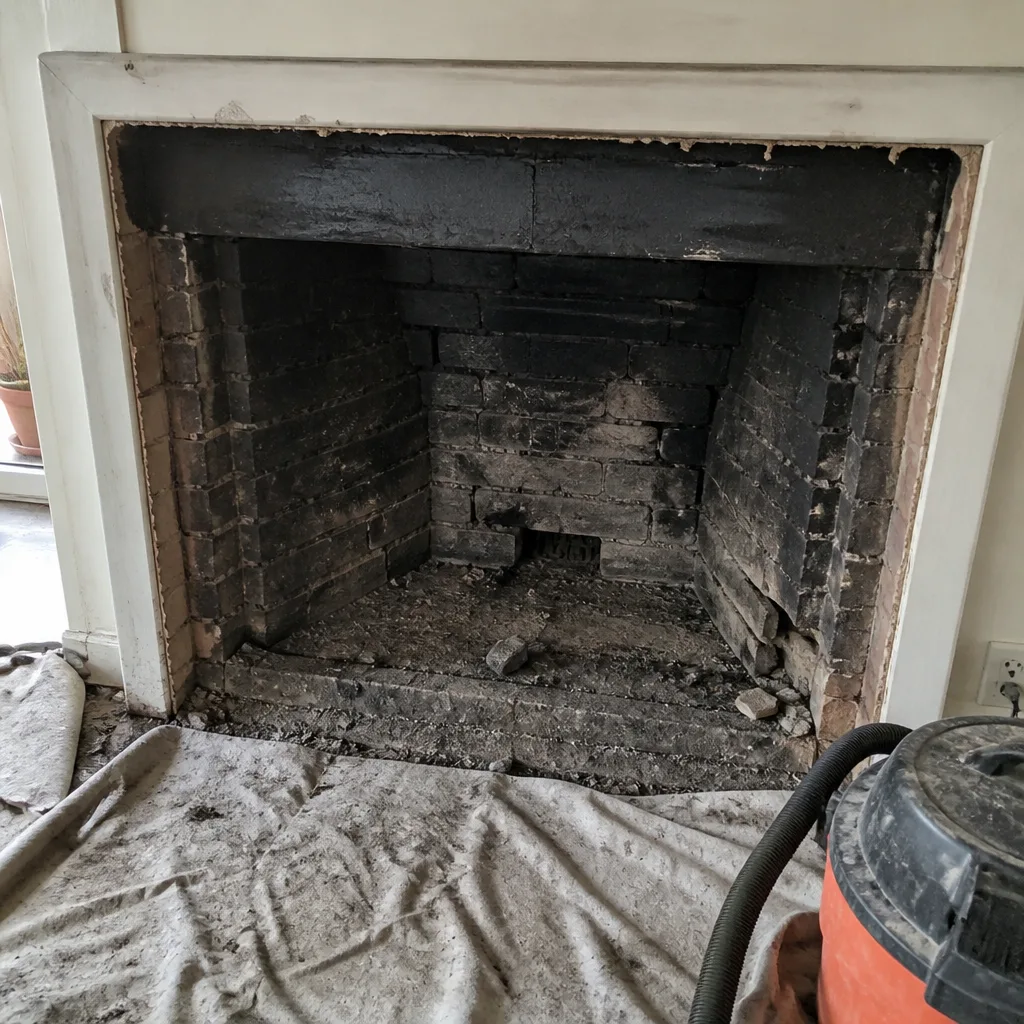 Before
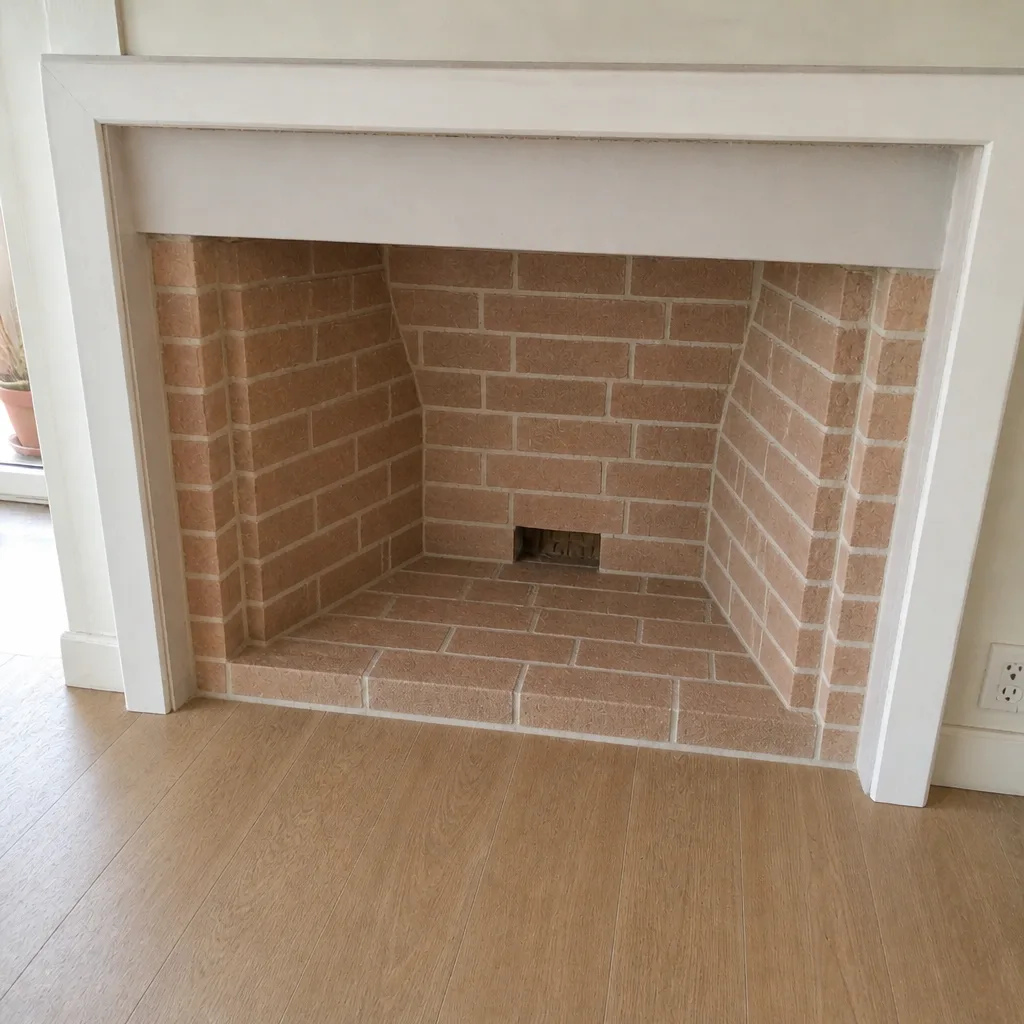 After
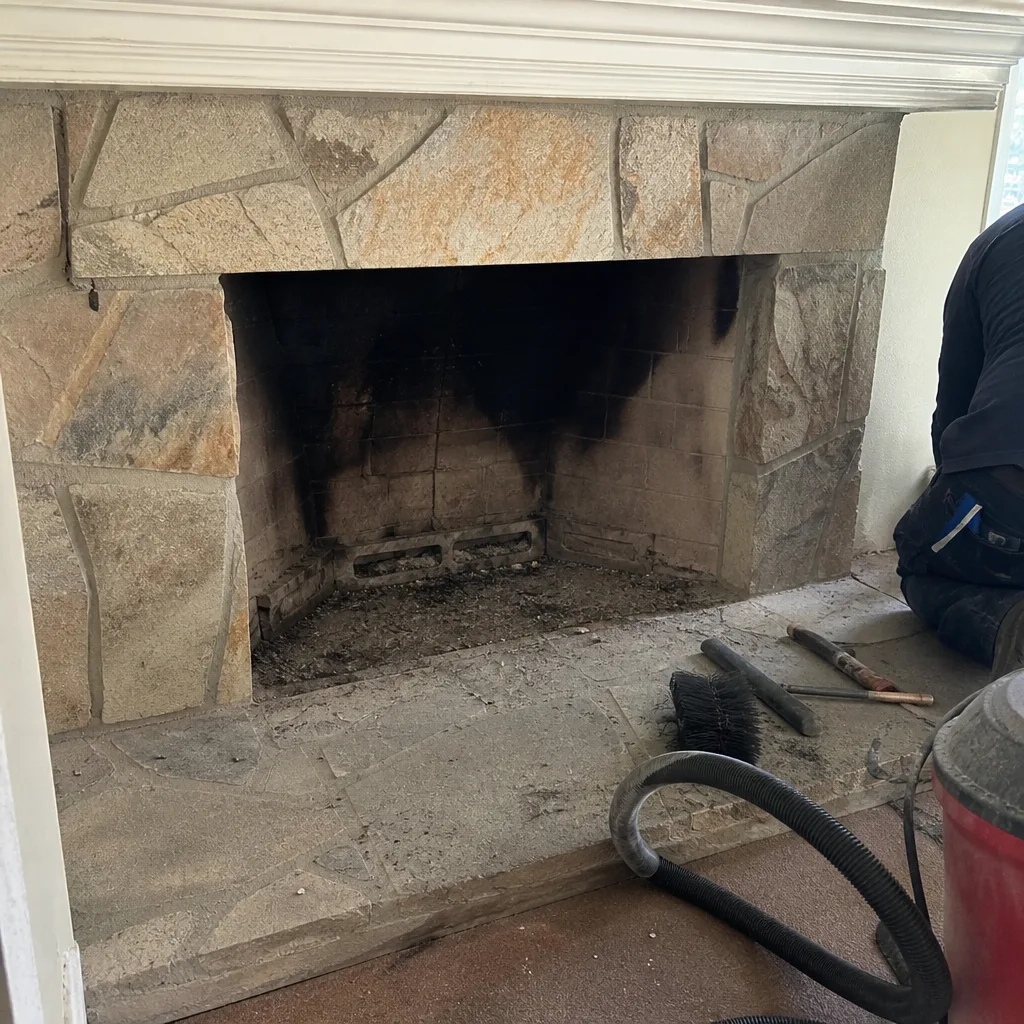 Before
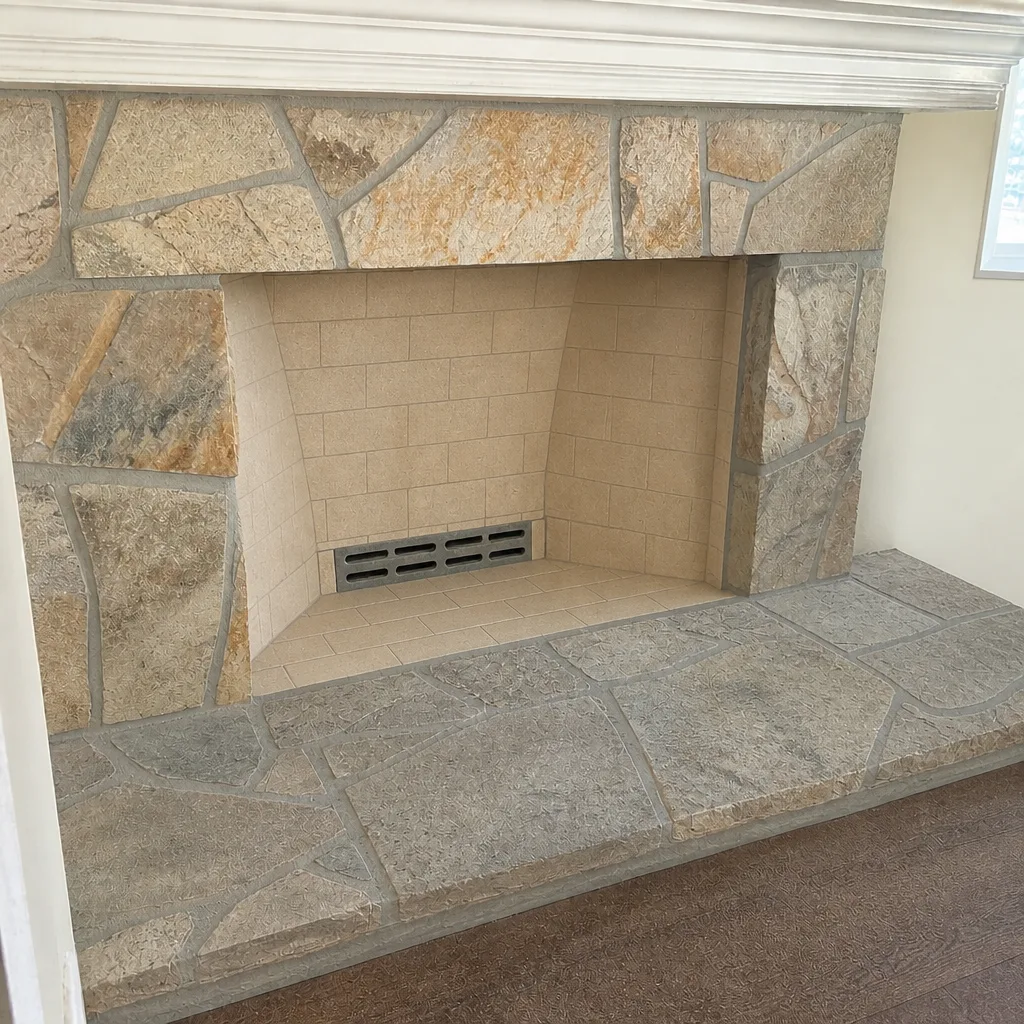 After
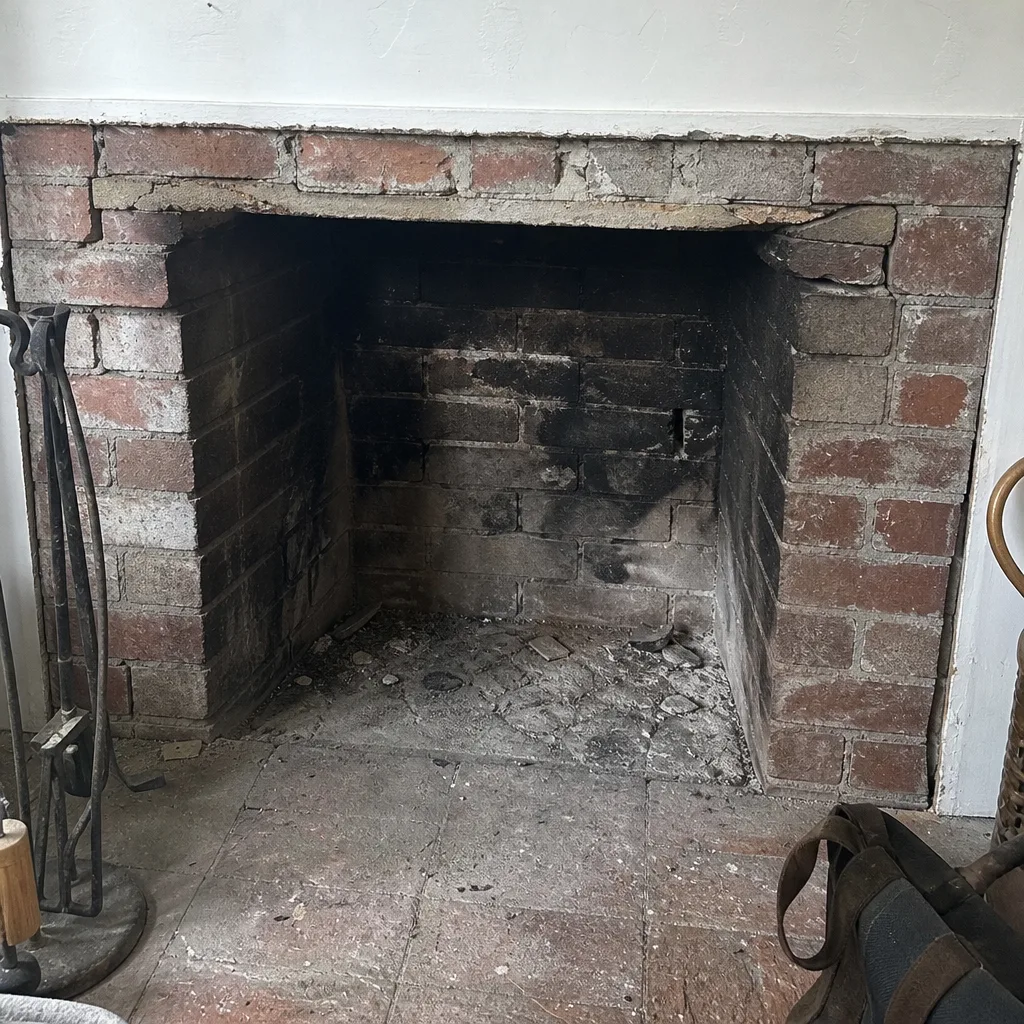 Before
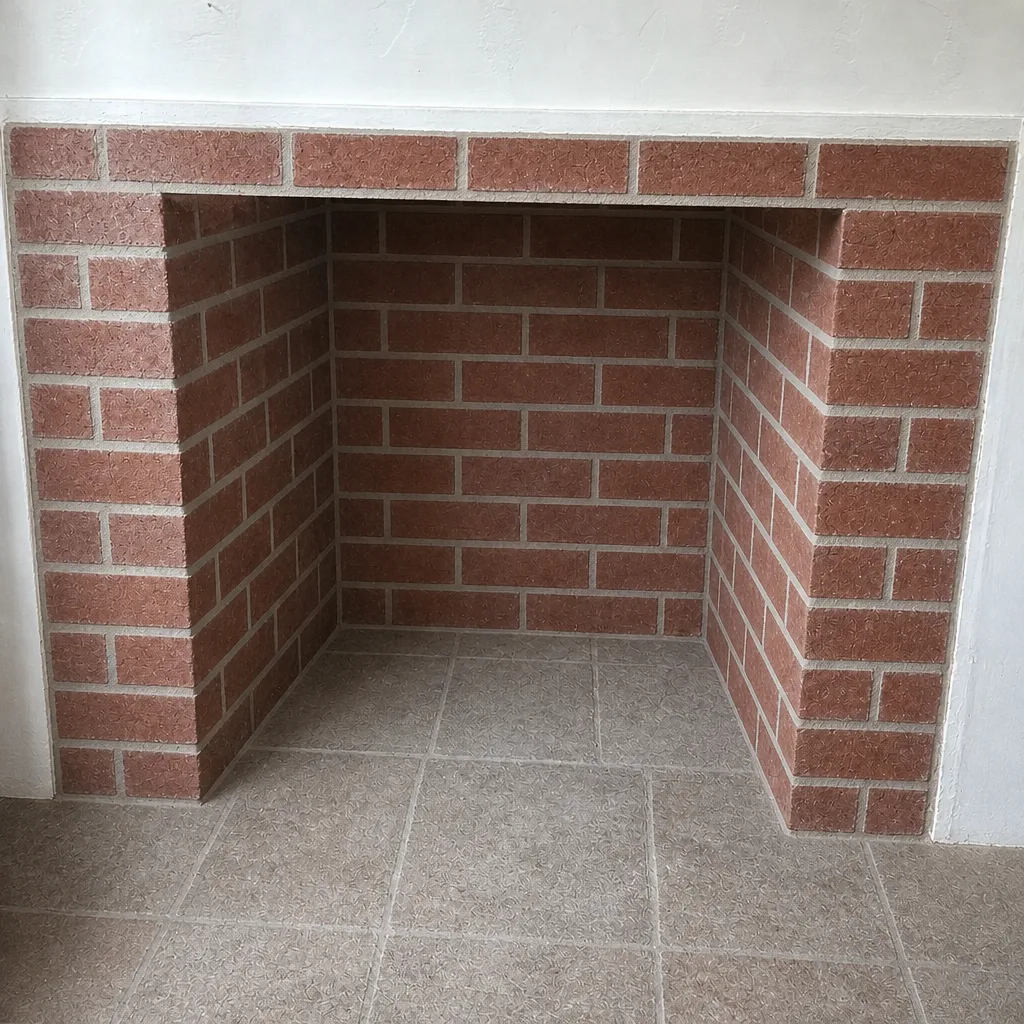 After
When to Call a Professional
Call a professional sweep when any of these apply: you’ve burned through a season without a sweep or inspection; you see staining, cracked firebrick, a damaged crown or a missing cap; the fireplace smells smoky when it’s not in use; a carbon monoxide alarm has gone off; you’ve bought a home with a fireplace and don’t know its history; or you have a gas insert that hasn’t had its vent inspected. Those are all reasons to get a technician out, and not all of them are emergencies, which is fine. The point is to know which is which. When you do call, ask for the camera inspection and the written report, because that’s the evidence the rest of the decisions ride on. Chimney Sweep Dana Point offers free estimates in Dana Point. Call (844) 625-7380. We answer 24/7. Fast dispatch from 7am to 7pm, Sunday through Friday.
Frequently Asked Questions
Once a year if you burn regularly, and inspected every year even if you burn lightly or only occasionally. In Dana Point, the light-burning pattern most homes follow means the inspection matters as much as the sweep, because it catches crown, cap and liner problems that a sweep alone won’t find. If you burn less than a cord a season and the flue stays clear, annual inspection is usually enough. Call (844) 625-7380 for an exact quote on a sweep and inspection; the estimate is free.
Only if the camera inspection shows the existing flue is damaged, unlined, or the wrong size for the appliance. A clay tile flue in good condition doesn’t need a liner. When a liner is the right fix, a DuraFlex flexible liner system is the usual choice for an older or irregular flue, because it’s designed to fit the flue it’s installed in rather than being sized by guess. You should see the footage before any liner is quoted. Call (844) 625-7380 to book an inspection with a camera report.
Most years, nothing. But the problems that do develop, a cracked crown, a loosened chase cover, a failing liner, tend to get more expensive the longer they sit, because water and creosote keep working on them. A small crown crack that could be resurfaced can turn into a structural repair if moisture gets in through a full rainy season. The inspection is what tells you whether this is one of the years where it matters. Call (844) 625-7380 for an exact quote.
It’s different maintenance, not less. A gas insert doesn’t build up creosote the way wood does, but the vent, the connection and the flue behind it still need an annual look, and a disconnected or blocked vent can put combustion byproducts into the room. If the insert has been sitting unused for a season, get the vent checked before the first use. Call (844) 625-7380 to schedule.
A standard sweep and inspection is typically a flat fee quoted per job, with the price set by the written estimate rather than by the hour or by how long it takes. Repairs, if any, are quoted separately, and nothing gets recommended without camera evidence you can see. Because pricing depends on the system and its condition, the estimate is the only number that counts. Call (844) 625-7380 for an exact quote; estimates are free.
You can do the low-risk visual checks: the firebox, the damper, the hearth, and a look at the crown and cap from the ground with binoculars. You shouldn’t walk the roof or open the flue to clean it yourself, and you can’t see the inside of the flue without a camera. Use your own check to catch signs early and leave the flue, the vent and the roof work to a technician. Call (844) 625-7380 if you want a professional look at what your checks turned up.
The Bottom Line
A Dana Point chimney doesn’t need the maintenance calendar a cold-climate house needs. It needs one built around a short burning season, a long idle stretch, marine layer moisture and the gas inserts common in local homes. Sweep and inspect once a year, check the crown and chase cover in spring and late summer, watch the firebox and the vent between visits, and keep dated photos and a written report so you can see whether the system is stable or moving. That record is what lets you tell the difference between a repair you should schedule and a repair that can honestly wait. Chimney Sweep Dana Point handles inspection, sweep, cap and crown, fireplace repair and chimney repair from one company, with trade-grade products and a camera report you can see for yourself.
If it’s been a season or two since the last inspection, or you’ve moved into a home with a fireplace and no history, call (844) 625-7380 for a free estimate. We answer 24/7. Fast dispatch from 7am to 7pm, Sunday through Friday. Our technicians have up to 11 years of experience, the work is done with brands like DuraFlex, HeatShield, Gelco, Olympia Chimney, Famco and Copperfield, and every recommendation comes with the evidence behind it.
Written by the team at Chimney Sweep Dana Point.