
Top Signs You Need Chimney Cleaning Service – Don’t Ignore These
The most common mistake we see in Dana Point is treating a chimney like a calendar item: if it’s been roughly a year, book the sweep, and if it hasn’t, leave it alone. That logic falls apart here. Plenty of Dana Point chimneys sit cold for long stretches and quietly build the conditions you should be worried about, while others burn weekly and stay in decent shape. Cleaning need is about what’s happening inside the flue, not how long it’s been since the last fire. Watching for the right signs beats counting months.
Why the Fireplace That Never Gets Used Can Be the Riskier One
In our experience, a Dana Point chimney that hasn’t seen a fire in two years can need attention more urgently than one burning every week. Moisture and animals don’t take the off-season off. A dormant flue is a quiet, dark, dry cavity, and that’s exactly what birds and squirrels look for. Nesting material blocks the flue and creates a fuel source sitting right above your firebox, so a fire lit once at the start of winter can meet a plugged stack.
Moisture is the other idle-time problem. Water finds its way past a failing cap or crown, and once it’s inside, it combines with old soot to form a dark, acidic sludge that eats at masonry and metal liners. It’s slow enough that you won’t notice it day to day, but the deposit stages behind it are real. Fireplaces used occasionally also tend to start cold, and a cold flue means a slower, cooler burn the first while. Cooler smoke deposits stickier, more concentrated residue than a hot fire does. Intermittent use and zero use are two different patterns, and both reward a close look at the flue.
The Creosote Stages: What You Can Actually See From the Firebox
Creosote is the residue left behind by wood smoke, and it doesn’t build up the same way twice. Knowing the difference between the stages is the single most useful piece of information we can give a Dana Point homeowner, because it tells you whether to schedule a cleaning or stop burning.
- Stage 1: A thin, sooty, flaky coating. Wipes or brushes off easily. This is normal and routine cleaning handles it.
- Stage 2: Denser, crumbly or slightly shiny deposits that cling to the flue walls. Needs proper brushes and effort. Left alone, it builds toward the top of the scale.
- Stage 3: Glazed, hardened, tar-like creosote. Looks a bit like dark glass or varnish and is extremely combustible. Standard brushes won’t touch it; it takes a specific removal approach.
You can sometimes see the early stages from inside the firebox, looking up into the smoke chamber with a light. What you’re looking for is texture: flaky soot versus a shiny, tarry sheen. If it shines, that’s a stop sign. Stage 3 glazed creosote is the fire-risk stage, and the cold flue starts common in an intermittently used Dana Point fireplace are a known way to build it. You don’t need to diagnose this yourself. A camera inspection and photo report during a sweep lets you see the flue for what it is rather than taking anyone’s word for it.
Odor Patterns: What Each Smell Is Telling You
Your nose is a genuinely useful diagnostic tool, and it’s free. When a fireplace is cold, what it smells like in the room tells you a fair amount about what’s going on inside the chimney.
- Musty or earthy smell: Often moisture and the biological growth that follows it. A leaking crown or cap is usually the source, and this is where a chimney cap and crown check earns its place.
- Sharp, acrid, campfire-in-the-room smell: Strong creosote or soot load pulling odor down into the living space. Worth a cleaning before the next burn.
- Smoke smell coming back when there’s no fire: This can point to a flue restriction or a pressure problem rather than only buildup. Blockages from nests, leaves or a collapsed section cause this, and it’s a sign to inspect before using the fireplace.
If the smell is persistent in a cold house, don’t just open a window and move on. It’s the kind of thing that’s easy to mask and harder to fix later. A Dana Point home with a fireplace that hasn’t been used in a while is the most likely place to catch this early, before it turns into a bigger repair.
Visual Signs Around the Hearth That Point to a Flue Restriction
Not every warning shows up inside the chimney. Some of the most reliable signs show around the firebox and hearth, and each one can indicate a restriction or airflow problem upstream.
- Smoke staining above the opening: Soot streaking the wall or firebox surround says smoke is spilling into the room instead of going up the flue.
- A lazy or weak draft: Fires that smolder, won’t take, or smoke the room at startup. Backdraft often traces to a restriction, not just a cold day.
- Cracks in the firebox or smoke chamber: Worth a closer look during a fireplace repair assessment, since interior damage changes how the whole system drafts.
- Water marks or efflorescence on the masonry: White staining and damp patches say moisture is getting in above the firebox, likely at the cap or crown.
- Rust or discoloration on a metal liner: This is where an inspection matters more than a cleaning alone, since a compromised liner raises the stakes.
Any of these can be read from the room without climbing on a roof, which is its own kind of safety win. We’d rather you see the signs from the couch than go up a steep roof to check.
Schedule a Cleaning vs. Don’t Use the Fireplace Until It’s Inspected
Separating these two categories is important. One is routine, the other is a hard stop.
Signs that mean schedule a cleaning
- Stage 1 or Stage 2 creosote visible in the flue
- A mild musty smell with no active moisture damage
- Ordinary buildup after a season of regular use
- Draft that’s okay but not great
Signs that mean don’t use it until it’s inspected
- Stage 3 glazed, tarry creosote in the flue
- Visible flue blockage (nesting material, debris)
- Smoke spilling into the room when you light a fire
- Cracks in the firebox liner or smoke chamber
- A strong acrid or musty smell that won’t clear
- Water actively coming in around the firebox
A blocked or glazed flue trapped behind a closed damper is one of the setups most closely tied to chimney fires, and those can smolder unseen. Our technicians have up to 11 years of experience reading exactly these signs, and the same goes for carbon monoxide through a compromised flue. If you’re unsure which category you’re in, treat it as the caution side. A short pause costs nothing; guessing wrong can cost a great deal.
When to Call a Pro
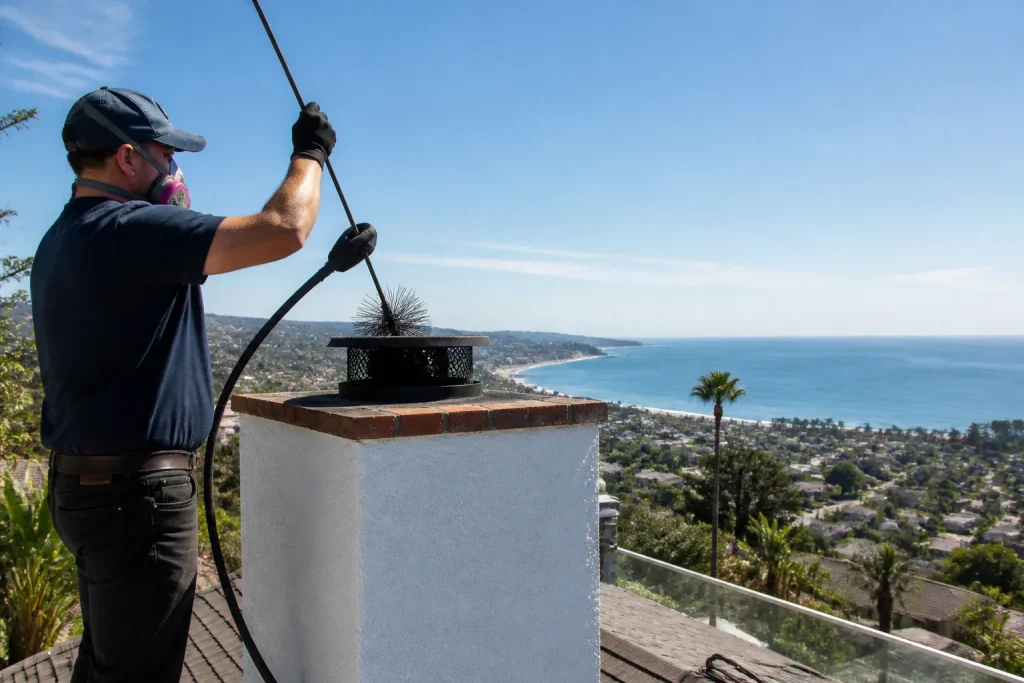
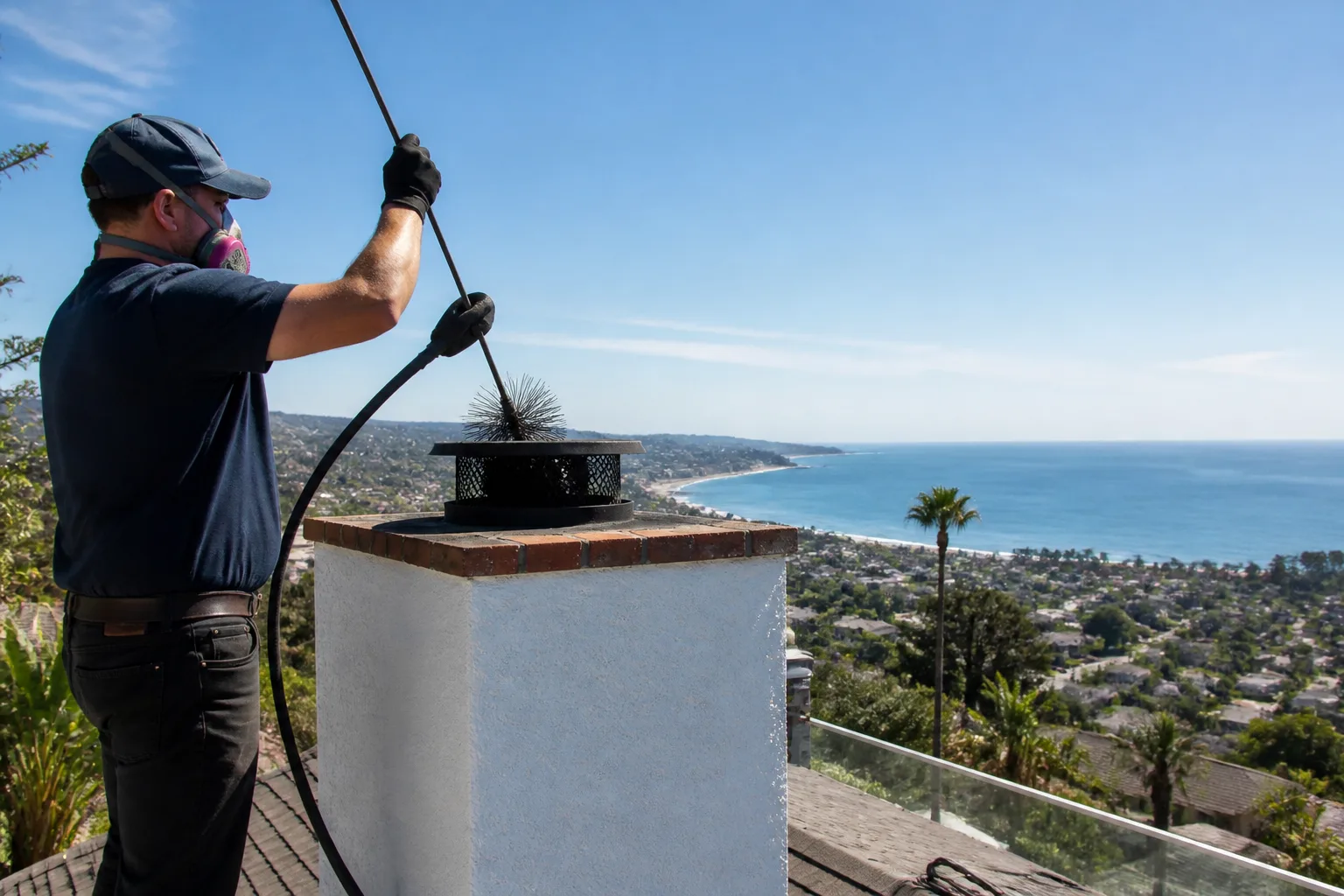
Some of what’s on these pages is judgment you can bring to the problem yourself: watch, smell, note. The work inside the flue is where a trained professional makes the difference. Sweeping, camera inspection, cap and crown replacement, resurfacing and relining all involve tools and steps that don’t belong in a weekend project, and a steep roof is no place to test your balance. A camera inspection and photo report during a chimney sweep shows you exactly what’s in the flue, so the decision rests on what you can see. Trade-grade products and proper installation matter here: we source and install professional-trade brands like DuraFlex flexible liners for older or irregular flues, HeatShield for resurfacing, and Olympia Chimney, Famco, Gelco and Copperfield for caps and components. That closed-loop scope means one contractor sees the diagnosis through to the fix.
We want to say one thing plainly, since it’s the hesitation we hear most: no one likes being told they need thousands in liner or masonry work with no way to check it. So we don’t. Nothing gets recommended without camera evidence you can see for yourself, and when a job can safely wait, you’ll hear that too. If a restriction turns into a chimney repair call, or the firebox needs a fireplace repair, those are assessed on their own merits. Related services in Dana Point we handle include chimney inspection and chimney cap and crown work, all under one roof.
The Bottom Line
The signs that matter most are not about how long it’s been since your last cleaning. They’re about what’s inside the flue: creosote stages, odor patterns, smoke behavior at the firebox, and moisture getting past the cap. In Dana Point, an unused fireplace has its own off-season risks, so a dormant chimney deserves the same attention as a busy one. Watch for the difference between schedule-a-cleaning and stop-using-it signs, and when in doubt, lean to caution. If you’re in Dana Point and need help, Chimney Sweep Dana Point offers free estimates – call (844) 625-7380. We answer 24/7. Fast dispatch from 7am to 7pm, Sunday through Friday. Estimates are free, a flat price is agreed before booking, and the written estimate sets the final price. You’re welcome to start with a look at Chimney Sweep Dana Point for the full picture of what we do.
Frequently Asked Questions
Most fireplaces do best with an annual inspection, and a cleaning whenever buildup or blockage is present, rather than on a fixed calendar alone. If you use your fireplace heavily, an annual sweep usually fits. A Dana Point fireplace used only a few times a season might go longer between cleanings but still benefits from a yearly look, since nesting and moisture can happen with no burns at all. Call (844) 625-7380 for an exact quote – estimates are free.
Common signs are smoke spilling into the room, a lazy fire that won’t take, a smoky smell when the fireplace is cold, and visible debris or nesting material at the top of the flue. Because a blockage often sits out of sight, a camera inspection with a photo report is the reliable way to confirm it. Don’t light a fire until it’s checked. Call (844) 625-7380 for an exact quote – estimates are free.
Light surface soot is one thing, but getting to the flue, reading creosote stages, and safely working on a steep roofline is a different matter. Glazed creosote and flue restrictions can also hide a liner problem, and handling that without the right tools or training risks injury. A professional sweep confirms what’s actually in the flue before any cleaning starts. Call (844) 625-7380 for an exact quote – estimates are free.
An unused chimney can still collect nesting material and water through a failing cap or crown, and both raise real fire and carbon monoxide concerns once you light a fire. The smoke smell alone often signals a restriction. Skipping it doesn’t make it safer; it just delays the discovery. An inspection sorts out what actually needs doing. Call (844) 625-7380 for an exact quote – estimates are free.
Written by the team at Chimney Sweep Dana Point.
Need Chimney Cleaning Help?
Call Chimney Sweep Dana Point - the local pro we connect you with is licensed and insured, here with fast help in Dana Point.
(844) 625-7380